The Fifty-Cent Threat

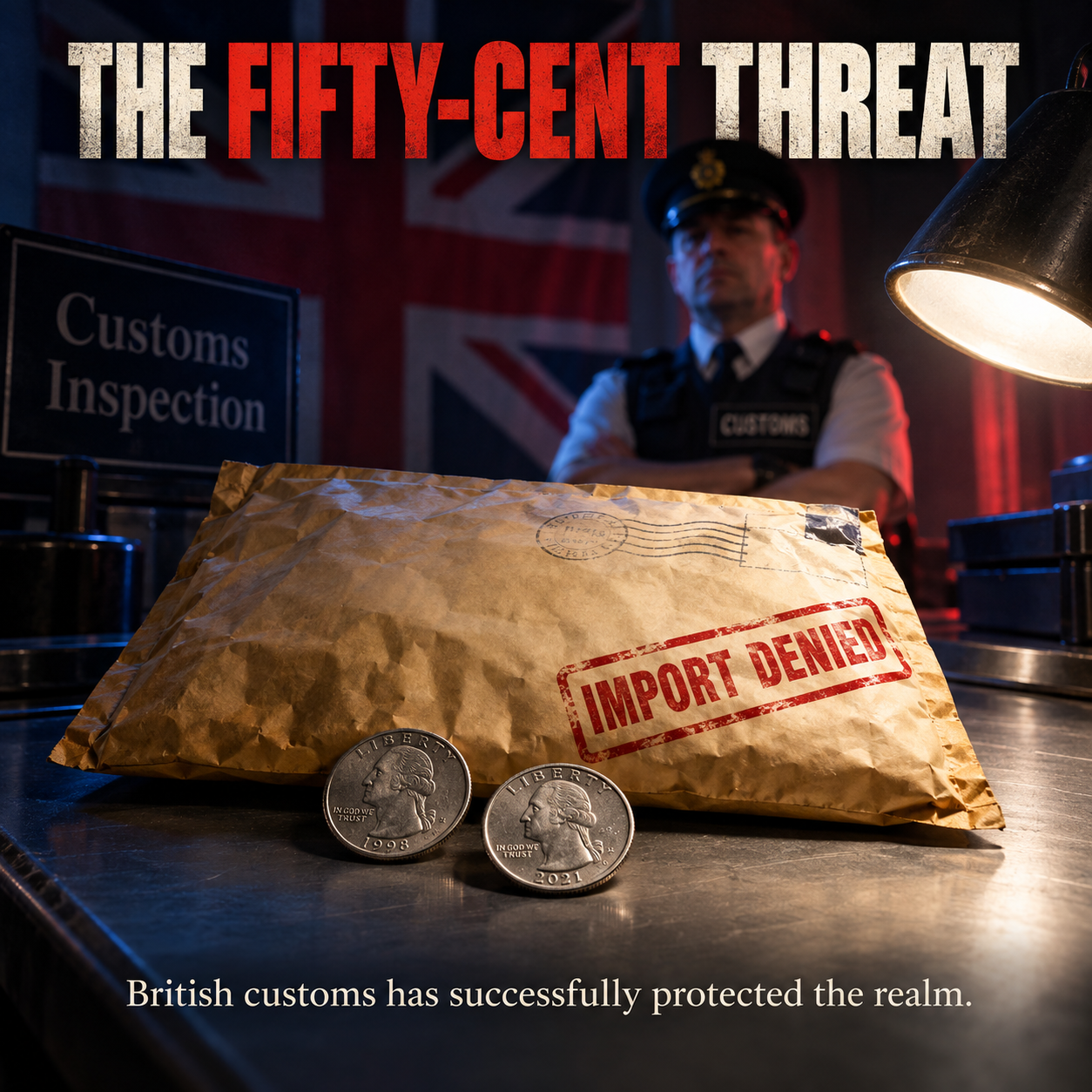
My wife recently spent over twenty dollars to send two American quarters to her coin-collecting brother in England. The coins weren’t anything special, but he needed them to complete his collection. We grew worried after weeks went by and he hadn’t received them. Yesterday, when I checked the mail, we had received the padded envelope back with a sticker slapped on it that read, “Return to Sender Destination Country Denied Import.”
The package was intact with the customs declaration on it. That form stated that the envelope contained two coins worth a grand total of fifty cents. Denied import? What did that even mean and why would it violate any law or regulation? My wife and I were confused. A bit later I decided to ask ChatGPT if it had any idea why this might have occurred.
ChatGPT: Yes—the two quarters almost certainly caused the rejection. Current USPS mailing conditions for the United Kingdom specifically list coins as prohibited imports, regardless of their small monetary value or whether they are intended as collectibles. The same rule also covers precious metals, jewelry, and similar valuables.
I was surprised. “Two quarters are a prohibited import?”
ChatGPT: It seems rather excessive for fifty cents—but customs regulations seldom possess a sense of proportion.
“Got it.” I said. I know ChatGPT is a machine, but being polite is a habit, and it had provided more information than the bureaucracies of two countries so, I said, “Thanks,”
ChatGPT: You’re welcome, Kyle. It’s an aggravating outcome for two harmless collectible quarters, but at least the mystery is solved.
“I agree.”
ChatGPT: British customs has successfully protected the realm from fifty cents. A triumph for international security.